Categories
Debated Reflected

Going Beyond

On May 3rd of last year, I made a critical decision that I never spoke about here: I began a shutdown of VJ Army and Pop’n Navy, the two Bemani community sites that had been the lifeblood of my web presence since 2004. (No, my blog is not called VJ Army.)

The decision was not a hard one: a lack of time/resources for programming had left both sites in a code stasis for over a year. Bugs weren’t getting fixed, and no relief was in sight. Complicating things was a forum community that was mostly interested in sniping and trolling each other. I no longer felt like a member in my own forums, and that weighed heavily on my conscious. It was a deeply painful failure to keep what had once been a civil, “good” corner of the gaming community from turning toxic.
While the sites officially shut down a month later on my birthday (a perverse birthday gift for myself), users were able to export their personal data into a portable XML format until what was supposed to be December 31st, 2009.
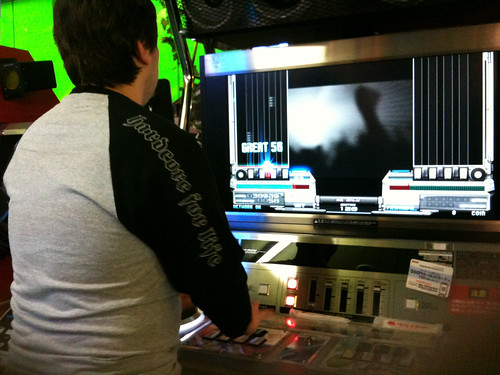
IIDX Hardcore For Life

As it turned out, that day I was in Akihabara, playing the very games that I had fallen in love with back in 2003. As my interest in Bemani has waned dramatically over the last few years, it’s not lost on me that as I clicked away and slapped the plastic turntable back and forth, no thoughts passed through my head about recording scores or checking where I was ranked.

The data survived into 2010 until tonight, when I finally pulled the trigger and expunged all the data from my database. So if you hadn’t exported your data yet – I apologize, but you’re too late. I don’t have a copy anymore.

There were countless things I learned from the five years the sites ran: nerdy things about database optimization and PHP’s image libraries; hard fought struggles with moderating communities and building good controls for data review; pointers on staffing a no-profit web site and balancing life versus your projects. Maybe these lessons will surface in other posts over the coming year – maybe they won’t. There is just one on my mind tonight:

The best schools and books and teachers in the world are no comparison to going out and building something that people want to use. Go: dig your hands into the soil (as it were), and create something. Be the president, the support technician, the artist, the lead programmer, the project manager. Take all of the credit and accept all of the blame.
I’ve quoted this before, but I can think of nothing more fitting:

> Don’t be afraid. If you want to do something, just go ahead and do it, but be prepared to take the blame, to feel the fall. Don’t sit around waiting to be asked, to be given permission. Just get out there and do it.

As I said in the original shutdown notice – it was a great five years, and I wouldn’t have traded it for anything.
Categories
Recommended

Tokyo 2010: Appendix

## All Tokyo 2009/2010 Posts

* Prelude
* Getting There
* Grappling With Technology
* Shibuya + Akihabara
* Engrossed
* Cat Room Chamamo
* Harajuku + Ikebukuro
* Akihabara Revisited + Marunouchi
* Tokyo DisneySea
* Fukubukuro
* A Scattered Final Day
* 26 Hour Party People
* Finale

## Photos/Videos

Available on Flickr.

## Survival Guide

I would not have been able to survive in Tokyo without the following:

TimeOut Guidebooks – extremely polished and well written (Pokemon Center location inaccuracy aside), TimeOut Tokyo City Guide this was our life blood for neighborhood specific maps, subway navigation, general information, critical phrases in Japanese, and address information. Doesn’t cover everything, but covers the major points. Available at most major bookstores.

iPhone ApplicationsHuman Japanese ($10) provides a fantastic introduction to the language, including sentence structure, hiragana/katakana guides, vocabulary lists, and cultural interludes. codefromtokyo’s Japanese ($20) provides a well organized (sometimes redundant) dictionary, including phrases and stroke ordering for kanji. It also includes quick look charts for katakana/hiragana, word list functionality, and JLPT study guides. Both are worth carrying on your iPhone/iPod Touch.

smart.fm – recommended to me a day or two into the trip by longtime friend Andy Livy, smart.fm provides learning goals for most languages and topics through a mostly flash-based learning management system. Lots of social networking integration and good tools means this helped me get the syllabary comprehension a little better very quickly. Wish I had known about this before I left.

Citibank ATMs – while I am not a Citibank customer, they are notable because (a) their Tokyo ATMs are open 24/7, unlike many others and (b) they take American ATM cards, unlike nearly every other ATM around Tokyo. Even our hotel ATM wouldn’t take our card. Find a nearby location, because you may need it in a pinch. While lots of places in Japan take cards, many still don’t. Cash remains king.

Suica – the contactless smart card used by JR Railways (and vending machines and lots of convenience stores), Suica made it painless to ride JR’s trains around everywhere. Foreigners can get a Suica/NEX package deal that represents substantial savings. Look for the blue signage near most train turnstiles – English screens are available if you press the “ENGLISH” button in the top right.

Airport Limousine – the last thing you may want to do when you arrive late at night is try to navigate the train system. Airport Limousine is more than likely going to be able to take you directly to your hotel, for about the same cost as a one-way NEX ticket. Ticket counters are on the first floor of Narita Airport and hard to miss.

Skype – so long as you have a good internet connection available to you, Skype remains the best way to deal with international calling. A number of calls home ended up costing us about $1.50. Load up before you go.

Friends – a thousand thank yous to John Scanlan, Richard Whittaker, Richard Bannister, Andy Livy, Ryan Bayne, and anyone else who sent recommendations and cultural advice my way over the last two weeks.

Categories
Enjoyed

Tokyo 2010: Finale

Shinagawa, South

Today was the first day since Christmas where I did not have something to see, somewhere to go, or anything to do. The hum of the heater has replaced the drone of aircraft; the distant squeal of the Jersey City lightrail turning the corner has replaced the rushing sound of the JR Yamanote line.

Piled across the kitchen counter are the things we brought back – cute dolls, strange snacks, and a pile of CDs. Our suitcases remain nearby, still mostly full of our clothing and charging cords. They will be unpacked in due time. The fridge has been refilled, the laundry is slowly getting done, and I am mysteriously not jetlagged even in the slightest.

I will not return to work until Wednesday, and while I’m starting to respond to work emails again, for now, I sit contently.

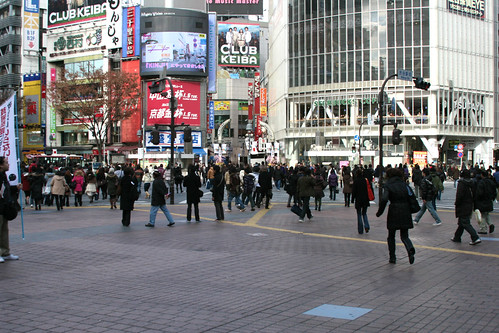
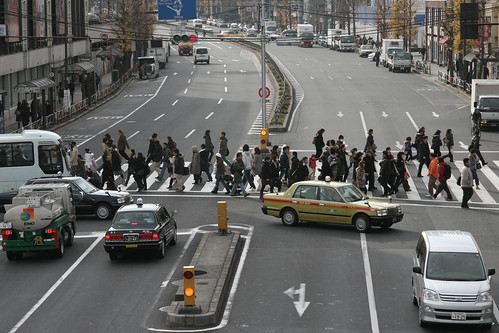
Hachiko Crossing

I have spent over five days in a place that was foreign yet welcoming, busy yet quiet, energetic yet polite.

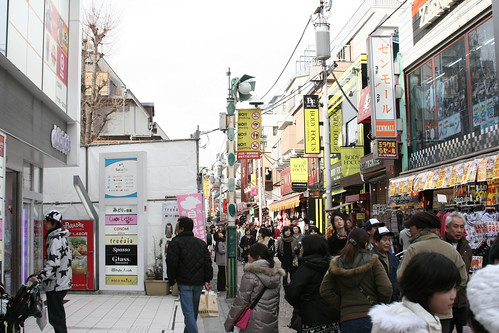
Takeshita Dori

I have walked through neighborhoods I never thought I would set foot in, wandered without purpose in pedestrian malls, and blended into crowded trains and stores.

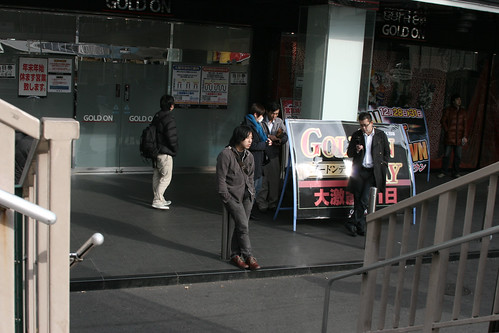
Waiting for Gold On To Open

I have inhaled the cloud of smoke in pachinko parlors, downed sake and shochu, seen some really weird things on TV, and inadvertently walked into the adult section of more than one anime store in Akihabara.

And yet it still feels like there is more to do. Even with another week, another month, I wouldn’t have been able to see it all. So we will continue working on our Japanese, keep our eyes peeled for new things to see when we are there, and start plotting for the next trip.

I can’t wait.

(Very special thanks to all of you who left comments, suggestions, questions, and encouragement on my blog, on Twitter, and on Facebook over the last week. It felt like you were there with us.)