Categories
Debated Narrated Reflected

Fiscal Year End vs. iPhone

For much of the last week, the conversation with nearly everyone I know has been the same.

“Are you getting an iPhone?”
“When are you getting in line for the iPhone?”
“Are you ditching your Sidekick?”
“I don’t understand the iPhone hype.”

I need to let you folks in on a little secret that does not immediately appear to have anything to do with the iPhone: I hate the last week of June.

Everyone, in the course of their professional lives, will find at least one day a year that fills them with dread. This day is not a surprise or appear out of the blue, but instead telegraphed by the calendar. It can be a busy season like holidays (retail), the arrival of students (education), tax season (small businesses), the end of the calendar year, whatever.

For me, it’s the last week of June, because it is the end of the fiscal year.

A Crash Course In Fiscaliciousness

Many people hear the term “fiscal year” and correct identify it as something to do with money and time. The idea is simple: your budget extends for one year. The date where one budget year stops and the next one starts is called the (say it with me now) fiscal year end.

For companies that make money, the fiscal year end is when they have to close all their deals for the accounting year to make sure they can report it to the investors as a good year. (This happens on a quarterly basis, too – hence quarterly earnings reports – but the year end raises the stakes a bit.) For institutions that aren’t in the profit business – say, education – the stakes are different.

Our goal is not to make money, but instead to spend it. And not in some willy-nilly fashion: we have countless support contracts on both hardware and software that expire in time with the fiscal year end. We also have some new purchases that we try to do if there’s money left over in the budget.

Now Back To Your Regularly Scheduled Complaining

Why this sucks: It takes anywhere from five to nine people to get a purchase from merely a requisition to a purchase order. These people must act serially, not in parallel. They often have to talk to each other, or send each other documentation. The process traditionally takes five business days and is pretty low-key.

During fiscal year end, however, it is occasionally necessary to get this full process to happen, from start to finish, within an hour.
Now repeat that well-defined, multi-person process over one hundred times. In one week.

Oh, and we must not forget about the vendors. You can’t requisition something without a vendor giving you a quote – and many vendors are slammed this time of year, as it’s their end of quarter/year as well. So best of luck trying to get quotes revised and clarified. This also means that when they do call you, it’s to get the purchase orders because they need to book that revenue.

This was a sixty hour week with almost no downtime. No windows, no sunlight (working lunches only!), the familiar smell of whiteboard markers and my laptop, the eye-ruining grid of Excel. Endless context switching, drilling through an ever increasing pile of email, scribbling on white boards, learning how mainframes work.

The Inevitable Question

Yes, you, in the back.

“Dan, I thought you worked with, you know, computers. You’ve got a degree in computer science. Last I knew you were doing server administration and all that. What the hell are you doing?”

I will skip the elaborate description of how my job got this way. The short version: I seem to have a significant gift of keeping tabs on nearly everything our organization is doing. (I blame my NADD.) This is a blessing – everyone knows they can come to me and I’ll probably have the answer, if not a direction to point them in. This is a curse – everyone knows they can come to me.

I have been pegged with so many random projects over the last year in my current role that my self-appraisal could only be completed by scrubbing over all of my outgoing mail for the last year. “Oh yeah, I did that!” is never a fun thing to hear yourself say.

And so, since it appears that nearly everything falls under my purview, so too does the fiscal year end.

Maintaining Sanity While Going Insane

This is obviously not the first year I’ve gone through this, but it was the first year where I’ve had a major portion of the workload for it. As such, here are a few observations as to how to keep your head from falling off when faced with major time-limited projects.

  • As soon as you see sit coming, firebomb your calendar. Remove anything you don’t need to be in, and blanket the rest in contiguous blocks of time. Long stripes from 9-5 every day send a clear message to your coworkers: stop booking me into your meetings.
  • Bring in things that will make you happy and remove stress – music and snacks are safe bets.
  • Prepare your family for the coming onslaught, but don’t forget to call them when you can.
  • If you feel yourself start to fry, take a lap. Find someone else and catch up with them for five minutes. Then get back to it.
  • Defer the people who call or email you. Say no. Otherwise, you will have something pulling you off point.
  • Slightly disregarding the last point: it may be in your best interest to plan something totally ridiculous as a major stress break in the middle of the project, like a group lunch. Note that this can backfire totally if you’re not careful, so try to have some extra help.

(These observations may seem obvious or useless. I think I may be writing them down more for my own future reference.)


Back to the question I started with: was I going to camp out for an iPhone? Would I join the crowd of Apple faithful, early adopters, and media circus at 5th Avenue and 59th Street? Would I be first in line for what Steve Jobs described as “the most revolutionary and exciting product in Apple’s history”?

No, friends, I would not. There was work to be done, and you better believe I got it done. The fiscal year end waits for no product launch.

I got mine Saturday instead.

Categories
Recommended

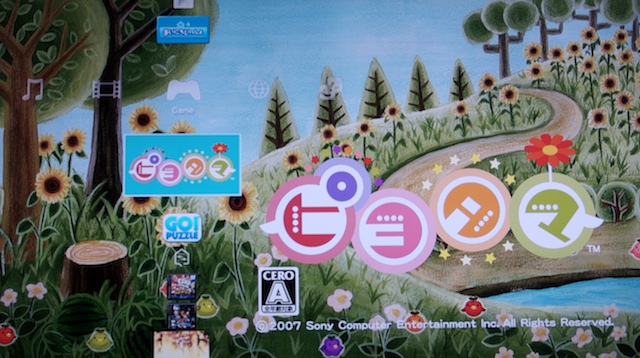
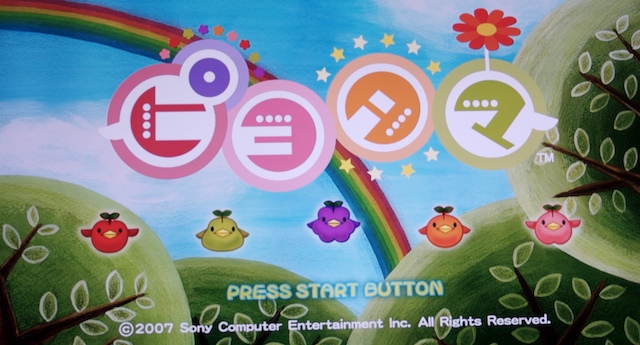
Piyotama: Hands On

Sony, in what may be either a stroke of brilliance or a moment of blindness (or possibly both), allows Playstation 3 owners to create PSN accounts in any country they so desire. And by making these accounts, you can get into stores for other countries. Freebies like *Mainichi Issuo* are easily downloaded and marveled at from American shores.

Purchasing from foreign stores, though, requires a credit card in that country or a prepaid value card.

As luck would have it, I have a connection who was willing to buy me a few cards. After buying PS1 hits like *Silent Bomber* and the amazing *Bishi Bashi Special*, I was left with 800 yen – just enough to buy today’s new Japanese-only PSN release, *Piyotama*.

Of course, my XMB is now a mess with betas, PSN games, foreign PS1 games, and some random demos. But it’s worth it in the name of science. I love having weird, obscure shit on my console.

Anyhow, Piyotama.

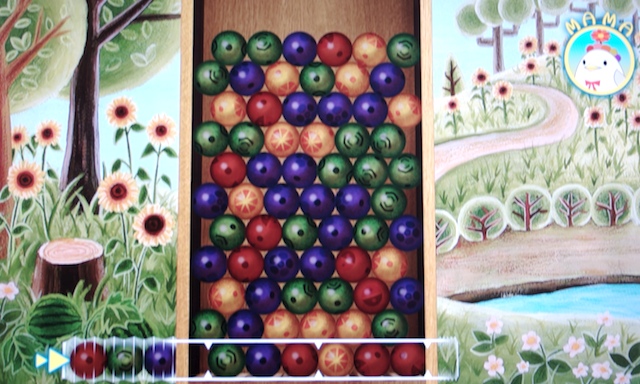
Like most puzzle games, I can’t say Piyotama has much plot – and if it does, my inability to read Japanese isn’t helping my understanding of it. (The on-screen interface, thankfully, is in English.) But there seems to be some benevolent chicken named Mama, who sit on some sort of log and lays eggs that look like fruit – and your job is to get rid of them.

Gameplay wise, I can’t say I’ve really played another puzzle game exactly like it before. So you have a hexagon-ish grid with the round egg pieces, and the goal is to get 4 of the same color in a row. But rather than drop pieces (ala Columns) or rotate them (ala Hexic), you move them from side to side. Three pieces sit off the game field, which you can rotate the order of, and then you push it back in and pop the three on the opposite side off. I can only think to describe this movement as “threading”.

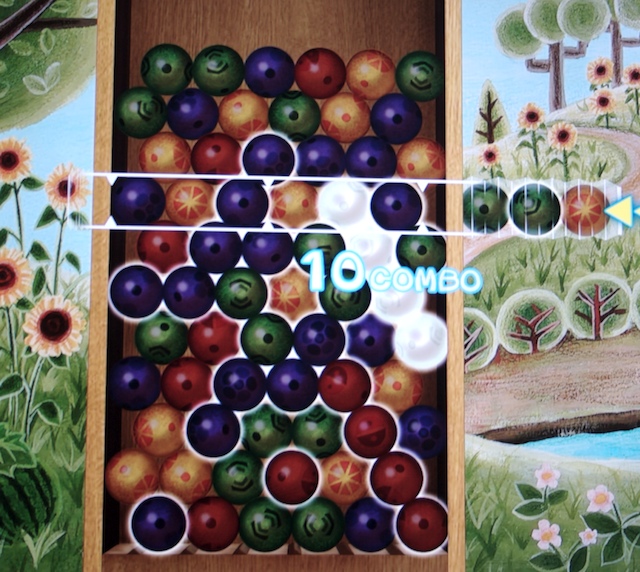
When you get four in a row (occasionally horizontally, mostly diagonally), the pieces highlight, but they don’t disappear immediately – you have a bit of time to keep threading back and forth and try and match more rows up, which leads to a bigger combo and thus more points. Eventually, all the matched pieces turn to eggs and hatch into fruit birds.

That’s right. Fruit birds. Adorable little buggers. The graphics in the game are certainly a delight – rich colors, well drawn backgrounds, and nice animation. The birds collect around the screen as you release them, and I’ve caught a few of them napping when I was having trouble making a chain.

There are also a couple of special pieces that allow you to clear all of one color at a time (which you can chain against multiple colors to clear the board), as well as a “heavy egg” that blocks you from moving that row. These up the challenge a bit. There’s also a slight degree of Sixaxis integration, allowing you to nudge the table to fill in gaps, as well as force matched eggs to hatch if you’re running out of time and space.

While the game is certainly easy to pick up and play, and it allows you to zone out and continue to do well (like so many other great puzzle games), Piyotama is missing that extra ounce of addiction that would make it crack-like, where I’d be begging to play just one more round.

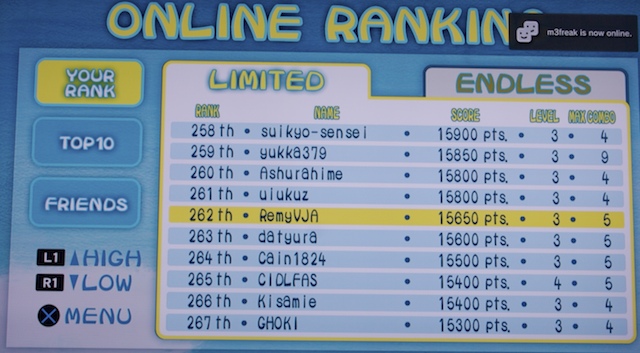
Part of the problem: it’s a bit lacking in modes. You have “Limited”, which gives you a short time limit; “Endless”, with no time limit; and “2P Battle”, which is local play only multiplayer. And that’s it, really – unless you consider watching demo movies or checking the online rankings a mode.

It’s a shame the multiplayer is local only, because like many color-matching puzzle games, it has some promise. It’s neat to watch the birds fly back and forth as you match pieces.

At least the game does have Internet Ranking, I guess.

Ultimately, you’re left with a charming puzzle game with lots of personality, but lacking in modes. Ironically, this is the exact opposite of the recently released Go! Puzzle, which is mode-rich but without charm or an identity. I can only dream of the sort of offspring you could get by merging both games.

While I realize most people reading this aren’t going to have the ability to buy it, I can recommend it for people looking for a unique puzzler that doesn’t necessarily have a lot of replay value. Otherwise, you should probably look elsewhere.

Categories
Debated Puzzled Over

Take Two’s Fifty Million Dollar Hat

Moneyhats. The phrase is frequently thrown around in gaming circles when it comes to exclusivity deals; the origin is [a Penny Arcade strip](http://www.penny-arcade.com/comic/2000/10/23) from October of 2000:

These sorts of deals are becoming more and more commonplace, and this week has had a whopper of one: Take Two announced that the “episodic content” for GTAIV will be exclusive to the Xbox 360.

Never keep Occam’s Razor far from you. As GAF user sangreal [discovered](http://www.neogaf.com/forum/showpost.php?p=6754804&postcount=375) in [a transcript of the recent Take Two earnings call](http://seekingalpha.com/article/38017), the simplest solution still is the most worthwhile one:

*Evan Wilson – Pacific Crest Securities*
>Thank you. And as it relates to the deferred revenue chunk associated with the episodic content on X-Box 360, you can see that $25 million of that moved into short-term deferred. Could you give us any sense of when that’s going to hit the P&L? Will we see $25 million at one time and then the second 25 or will it be a slow bleed?

*Lainie Goldstein – Chief Financial Officer, Take Two*
>The first 25 is for the first episodic content package that’s supposed to go out and that is in March of ’08. That’s why it moved into current because it’s in the next 12 months. The second 25 will be for the second episodic, the episode, and that will be later in fiscal ’08.

Repeat: These two exclusive content packs cost Microsoft a combined $50,000,000 to secure.

I am obviously in the wrong business.